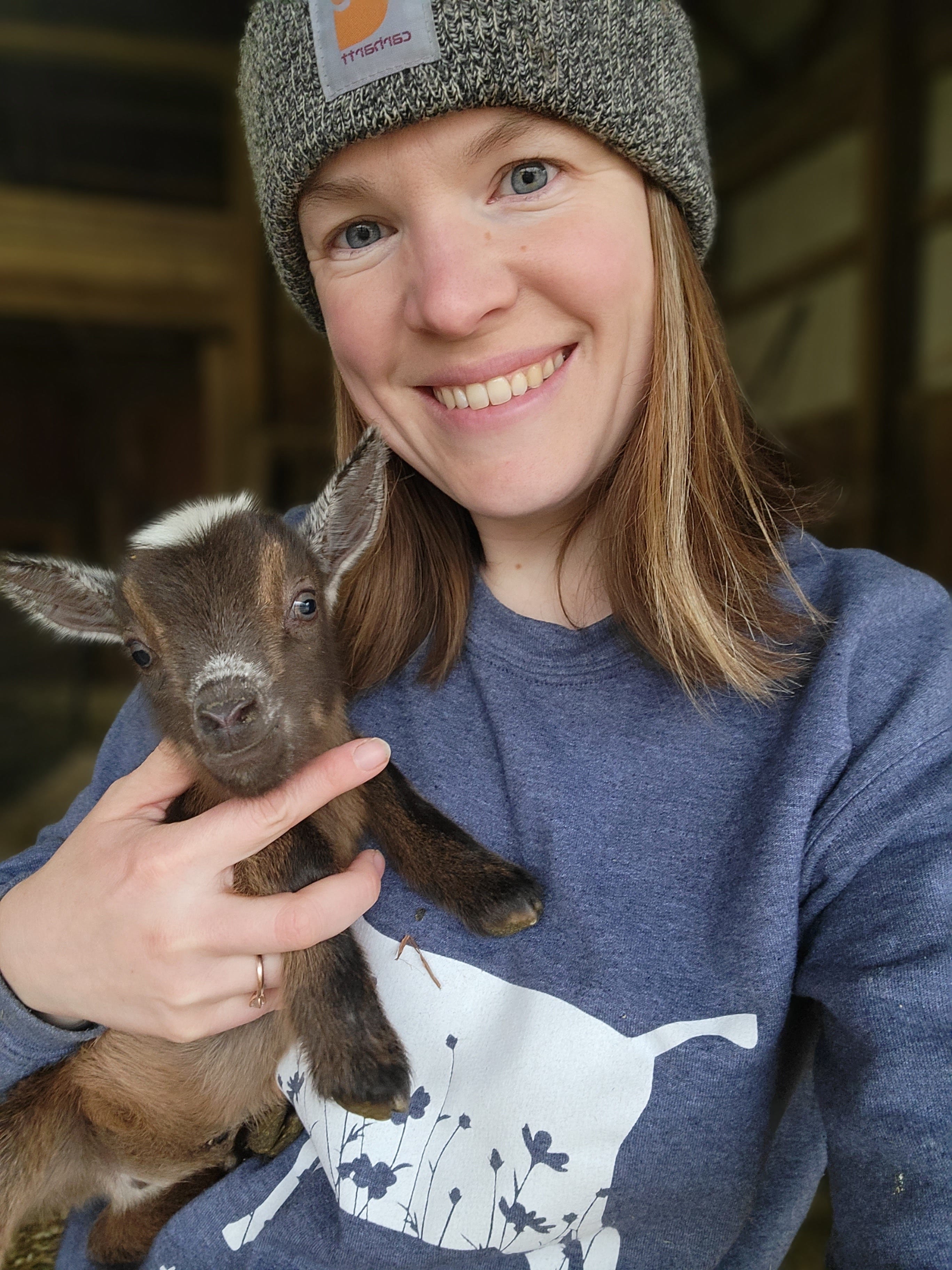
Goats or Cows?
...which dairy animal is right for your homestead?

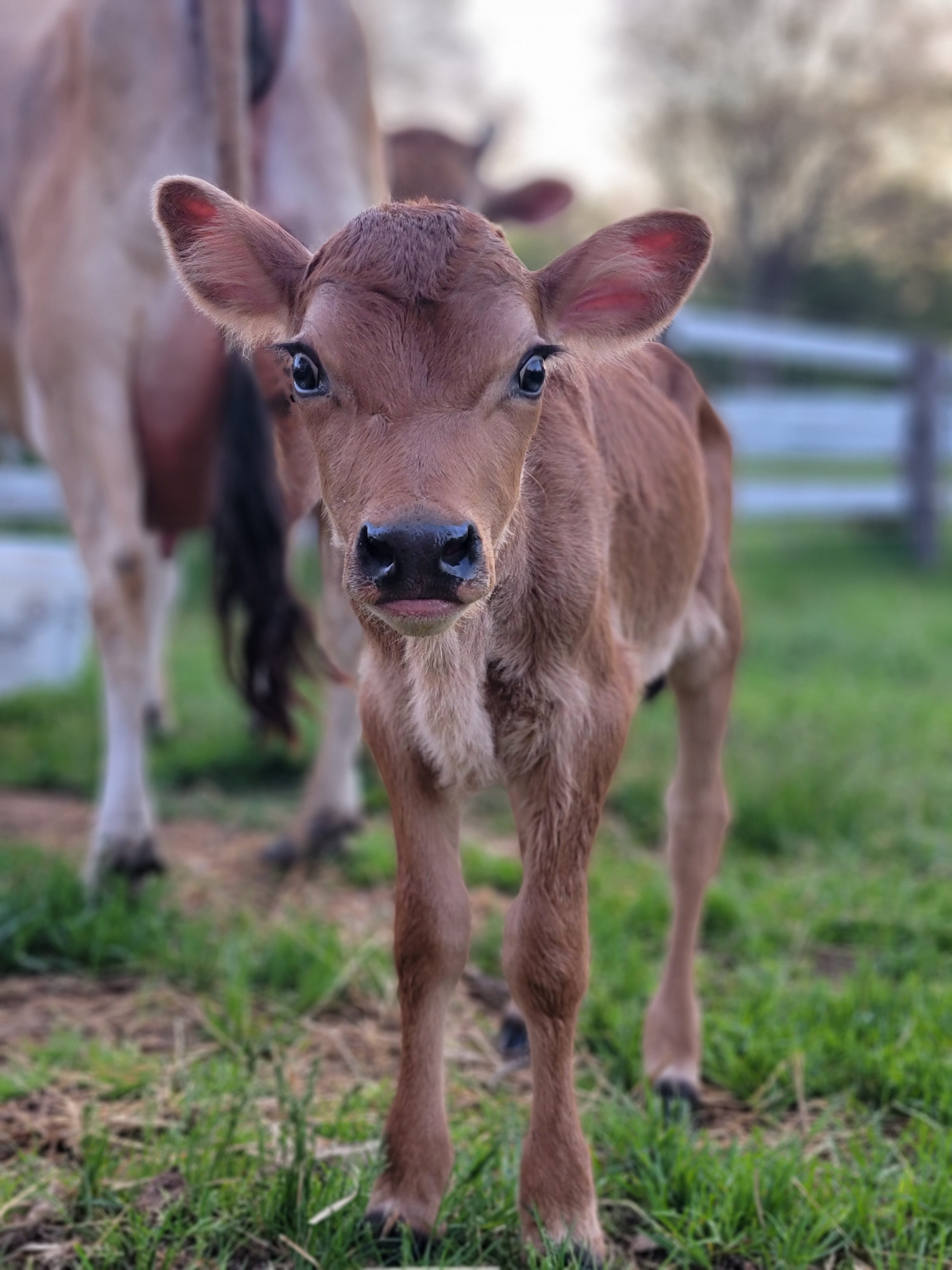
Ah, the great debate. Dairy cows or dairy goats? There was a time when I thought I needed a dairy cow to have a home dairy, but now, having had both, I can say with certainty that the goats are a better fit for our family and situation.
So, am I team Goat or Cow?
I’m team whichever is right for your circumstances. For us, it’s the goats.
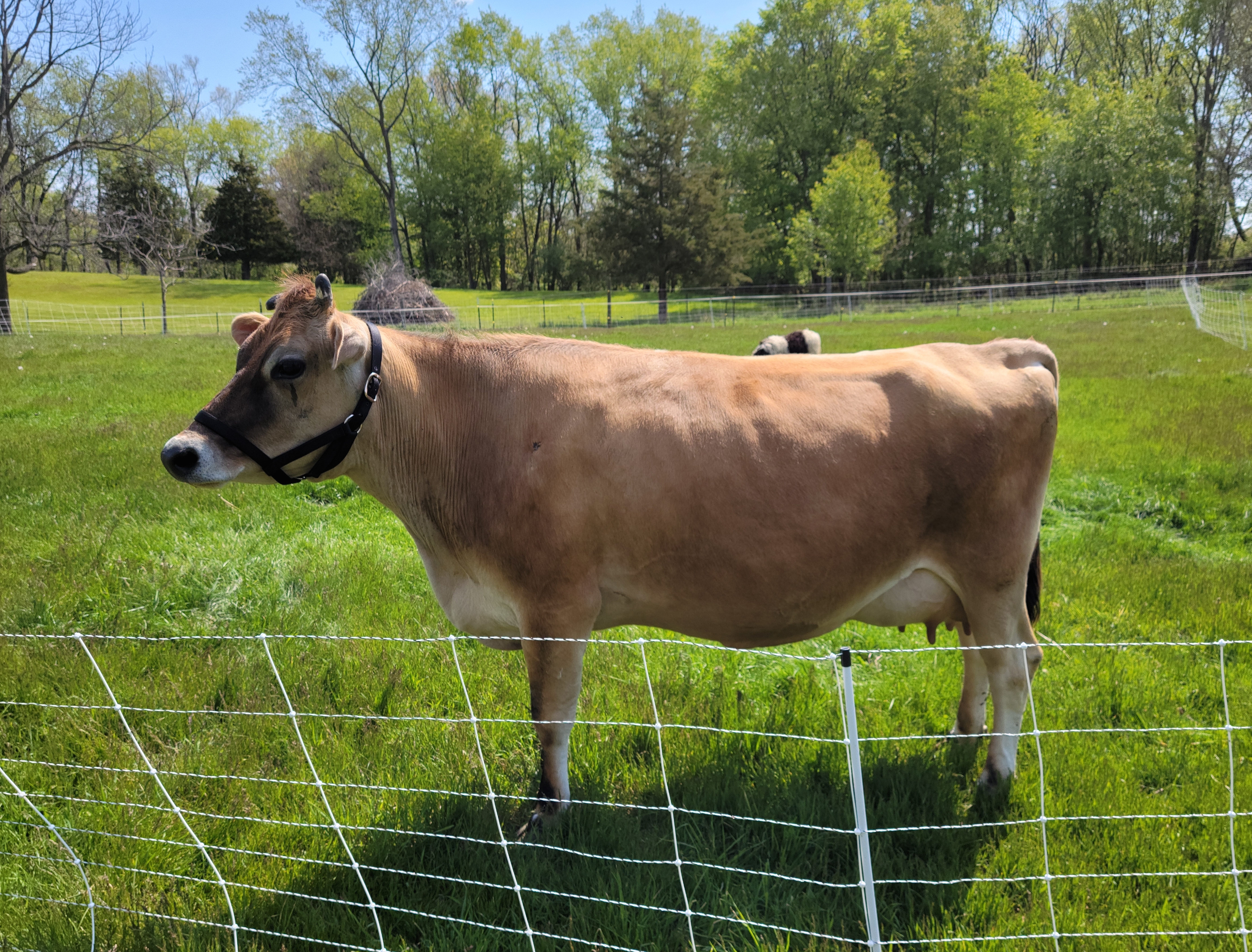
Back in 2020, before we owned dairy goats, Tommy and I dreamed of a Jersey cow. Those big, brown eyelashes and all that creamy milk that could be turned into every dairy delicacy. Milk to drink, cream for coffee, butter, yogurt, cheese, ice cream… need I say more? We were absolutely heart-set on a dairy cow. January of 2021, we found the perfect Jersey cow, brought her home, and named her Fiona.
Fiona was a 3 year old cow who came from a small dairy that was selling off its herd. She was already in milk and due to calve again in May. We had never milked a cow before. So, the evening we brought her home, we snuggled up next to her warm udder, Tommy on one side, me on the other, and attempted to milk with pastoral visions of a sweet cow, chewing her cud while we milked that creamy deliciousness into a stainless pail.
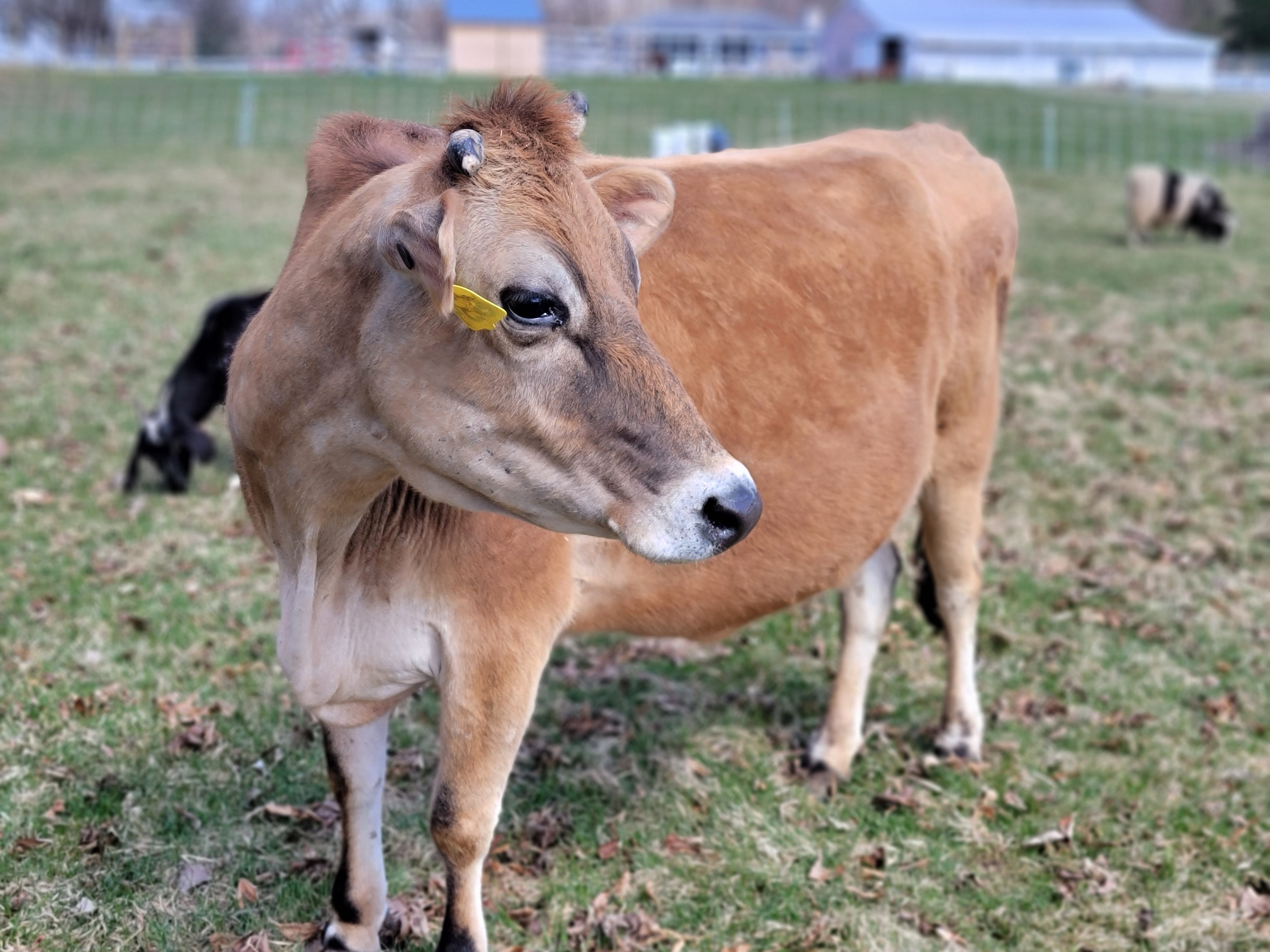
Uhh. She wasn’t on board with that decision. Despite tying her up, she still tried to walk away and step side to side. She wasn’t used to being milked without a stanchion. Also, dang were those rear teats small! I currently have a 70 lb Nigerian Dwarf goat with larger teats on her and that is no exaggeration!
I’m pretty sure that night we got about a quart of milk. I’ll spare you all the details, but over the next few weeks, there was a fair amount of stepping in the milk bucket, pooping giant cow pies that splashed into the milk bucket, the occasional pee into the milk bucket and much frustration. We did eventually settle into a routine after Tommy built a milking stanchion for Fiona and she began to get more comfortable with us. We dried her off in March so her body could focus its energy on growing her calf for the last two months of her gestation. In May, she blessed us with the most gorgeous heifer calf, Paprika. You haven’t experienced cute until you’ve seen a newborn jersey calf!
But then, I needed to relieve the pressure of Fiona’s engorged udder as her newborn calf could nowhere near do so by herself. The risks of milk fever and mastitis are no joke and a very real deal with dairy cows as they’ve been bred for thousands of years to produce far more milk than their single calf can consume. They have to be milked. And remember those tiny teats? Yep, they were even tinier when Fiona’s udder was engorged. I remember that first week, trying to milk her multiple times a day just to relieve pressure and crying because it was so dang difficult to do so. She was protective of her calf and ornery when I tried to lead her into the stanchion, but didn’t mind if I milked her out in the pasture. So there I was, just trying to relieve some dang pressure. Again, we did settle in to a routine and within a couple of weeks, we were milking her out, her edema had lessened and her calf was able to consume more milk. But yikes, those were some stressful first few days. At times, I had wished I’d had a milk machine to hook her up to, but those are a whole investment in and of themselves and something we couldn’t afford at the time.


Ok, I’ve lamented enough about the hard parts. Let’s spend a minute to highlight the good stuff. That milk, you guys! It was so so beautiful. Like gold. Fiona was able to feed her calf 24/7 and supply us with 3-5 gallons of milk, daily. It was honestly overwhelming. Until we got pigs. Those pigs were able to consume whatever we did not, which greatly helped relieve the load. I was swimming in all the milk we could drink, cream to separate for butter, soft cheeses and ice cream. She could absolutely crank out the milk, but it did take significant inputs. She grazed a significant amount of pasture and was eating quite a bit of alfalfa pellets and grain to maintain her body condition.
Ultimately, in July of that year, Tommy and I decided to part ways with Fiona and her calf, Paprika. She was a large animal with large needs and quite frankly, when she didn’t want to do something or lead somewhere, she would use her size to her advantage, pulling me around at the end of the lead rope or even swinging her horned head at me. Overall, we loved our experience with her as she was a wonderful teacher for us and we decided that we may revisit a dairy cow again one day, but for now, at this time and phase of our life, it wasn’t the right fit. We found a fabulous home for both mama and calf at a beautiful farm up north and while sad to see her go, were at peace with our decision.
And, this is what led us to dairy goats. Knowing we still wanted to have milk for our family, I decided to learn more about the option of goats for our dairy needs.
I had already purchased a few baby Nigerian Dwarf goats, but didn’t have an adult goat. So, I found Matilda, our Nubian, online. She had recently kidded and was in milk. With some of the money we had from selling Fiona, I drove to Indiana to buy Matilda as well as a cream separator. And that was just the start! Now, just two years later, we have 3 Nubians, 1 Mini-Nubian, 5 Nigerian Dwarf does, and 4 bucks.
For our phase of life, with small kiddos, on small acreage, with wooded browse area, goats are the perfect fit for our dairy needs.
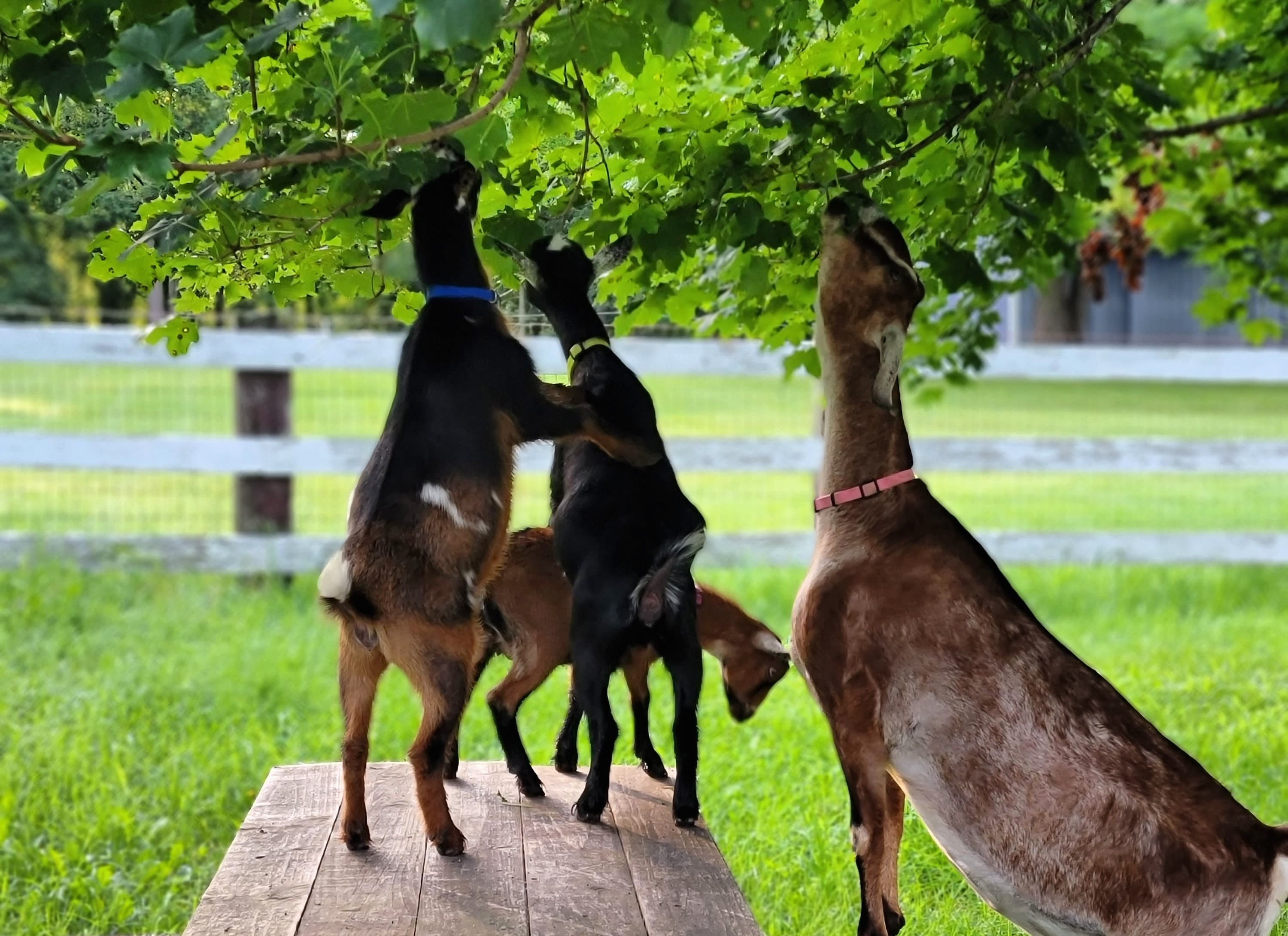
In my opinion, the goats are much easier to hand milk than the cow was. Their teats are longer and more cone shaped, meaning I can more easily manipulate them when hand milking to express the milk effectively. They also only have two teats, so they’re faster to milk out and less likely to get impatient. Finally, they’re significantly smaller which I find to be much less intimidating when it comes time to get them on the milking stand, especially first fresheners who need to be trained.
I can do everything with goat milk that I was able to do with the cow milk, except butter. Well, I can make butter with goat milk, but it’s more involved of a process as goat milk requires a cream separator to separate the cream from the skim milk vs. cow milk where the cream simply rises to the top to be scooped off. Goat milk is naturally homogenized. Supposedly, this is one of the reasons some people can drink goat milk and not cows milk, because the fat globules are smaller, and therefore easier to digest. In addition, all goat milk is A2/A2. This is not the case with all cow milk.


Ok, I’ve thrown a lot of information at you. Let’s sum up where we are at so far.
Pros of Goats:
milk can be easier to digest for people with dairy sensitivities.
goats are foragers, not grazers. If you have wooded areas, they may be better suited and it may be a more natural fit for them as well as your property
less risk of milk fever and mastitis. Goats can produce an impressive amount of milk for their small size, but they haven’t been genetically ‘pushed’ in the same way as dairy cows to produce such a massive amount of milk relative to their size.
goats eat less than a cow. If you don’t need 5 gallons of milk a day, 2 goats giving you a gallon or two and eating less than 1 cow may be a better option for you.
they poop hard little berries! Y’all this is SO MUCH more preferable than big, wet cow pie splats if they happen to poop while you’re milking them. I’ve also noticed less flies as a result. Goats also won’t lay their full udder into a bit wet poop pile right before you milk!
their smaller size makes them easier to manage on a small homestead and safer to train to milk if you’re starting out with a youngster.
they are so much easier to breed! No dangerous bull or technical AI (artificial insemination) to set up! Bucks (male goats) are stinky critters, but safer to house than a bull. You can often set your does up on ‘dates’ and borrow a buck if you don’t want to own your own for just a couple of does.
goats can be bred in their first year and are only pregnant for 5 months vs. cows which you typically wait to breed around 18 months. This all means you’re in milk sooner.
a quality pair of goats is cheaper than a dairy cow. In our area, you can get a quality dairy goat for around $400. So, call it $800 for a pair. Our dairy cow was $1,200. (Like with anything, if you get into niche markets or show winning champions, the price can increase dramatically. But, $400 is absolutely a fair price for a healthy goat that’ll put milk in the bucket.)
large breeds of dairy goats (Nubian, Saanen, La Mancha, Alpine, Toggenburg) and even some Nigerian Dwarf goats can give you a gallon of milk per day.
assuming the goat is healthy and not housed right next to stinky bucks, goat milk tastes just like cow milk. It’s sweet, creamy and absolutely delicious. If you’ve tasted goat milk that was funky, or ‘goaty’, it was likely not cooled down quickly enough, milked from a goat deficient in minerals, or milked from a goat that was housed to closely to a stinky male goat as that ‘musk’ can affect milk flavor.
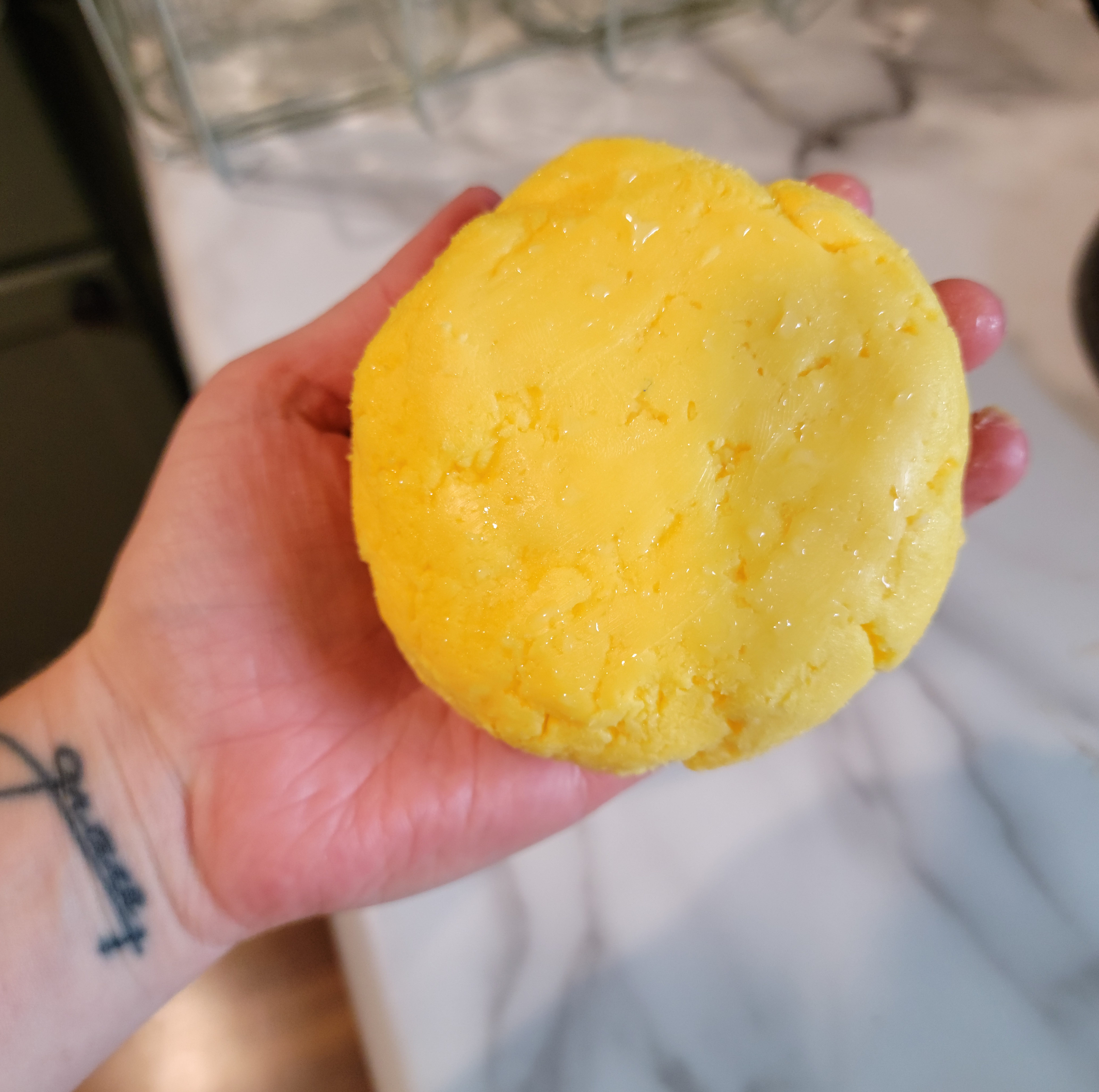
Now, I will give Team Cows the cream separation. If you’re looking to scoop thick cream right off the top of your raw milk to make the most gloriously golden butter ever, cows are the clear winner.
While you can make butter with goat milk, it requires a cream separator due to the natural homogenization of goat milk. Also, because goats process the beta-carotene differently than cows, their butter is pure white.
Cows are also simpler to fence most of the time. They’ll often respect a single strand of electric fencing, while goats require an electric net fence or multiple strands of electric. They’re very respectful once they understand the fence is electrified, but they do require more strands than a cow.
Ok friends, this is what I’ve got. From someone who has owned both, for our homestead size and functionality, dairy goats are the best fit for us.
As always, let me know if you have questions in the comments below and if you’re interested in learning more, be sure to check out our ‘Goats’ and ‘Goats for Sale’ tabs of our website! www.thechattygoat.com
Happy milking,
-Morgan